Layer 1 — Design-space record
SSbD DAG · the project graph itself
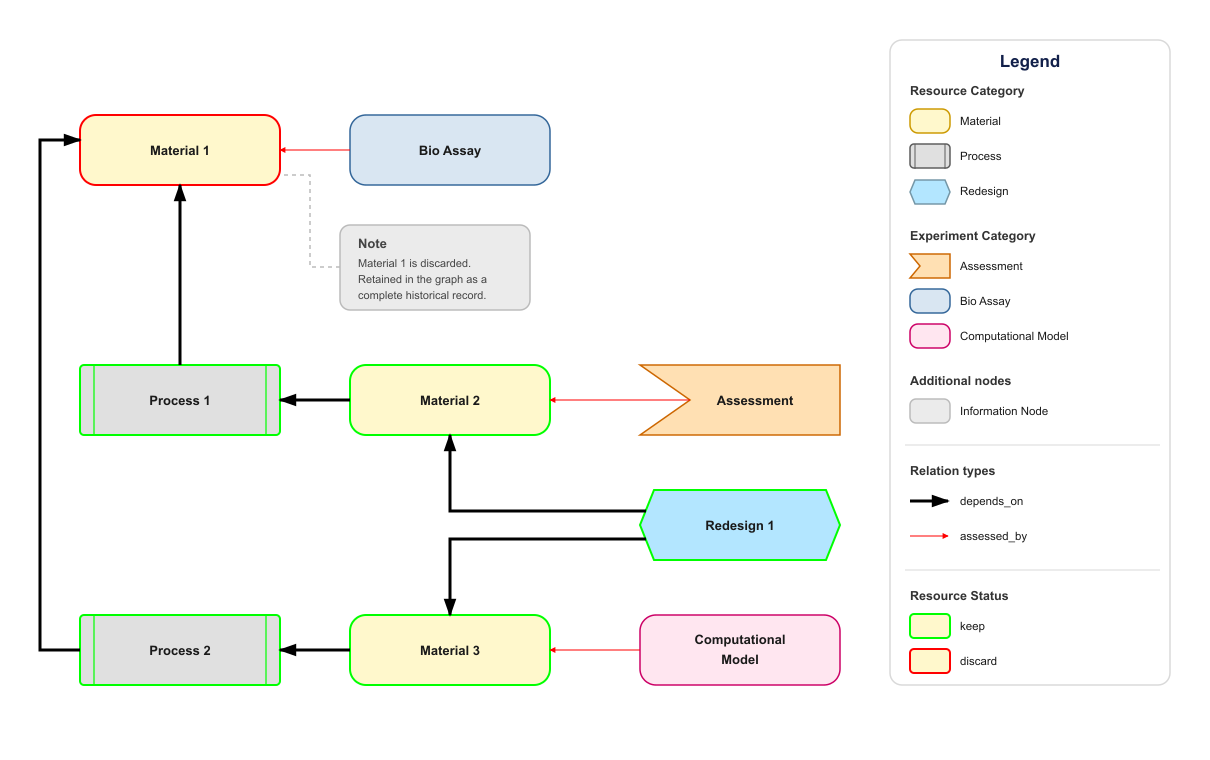
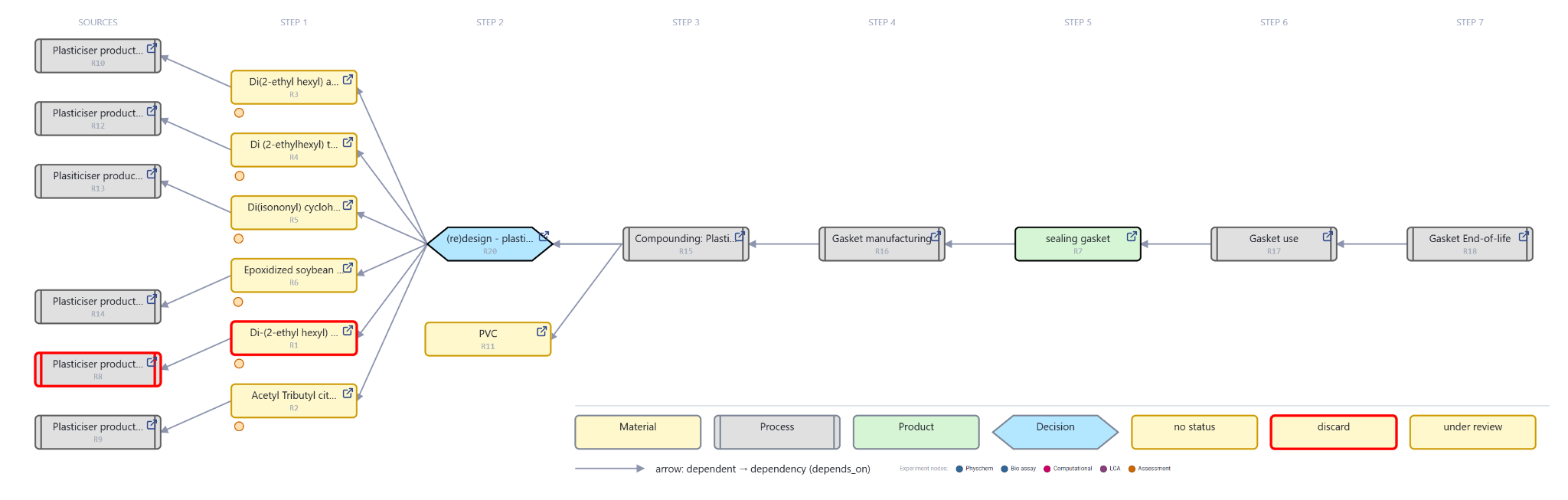
Layer 1 captures the explored project's design space and the dependencies between successive material, process and product states: nodes, edges, statuses and iteration information, validated against the graph invariants.
Designing a material safely and sustainably requires choices among alternatives — which precursor, dopant, coating route, substrate or end-of-life treatment. The set of configurations that could in principle be realised is the project's design space; a research project explores only a limited region of it. In the DAG, alternatives are resource nodes (materials, processes, products), decisions are branching points, and every decision inherits the outcomes of previous choices through its dependency edges. Rejected alternatives remain in the graph as a complete historical record, together with the results that led to rejecting them.